Horror’s Most Forgotten Sub Genre: Conspiracy Horror
What do all the following films have in common?
Invasion of the Body Snatchers (1956 + 1978)
The Wicker Man (1973)
They Live (1988)
They are shining examples of Conspiracy Horror.
Read why I believe this is horror's most forgotten sub-genre.
As we put to a close this first full week of November, I, like many other horror creatives, found myself confronted by the malaise that comes with the immediate loss of Halloween and the month of October as a whole. There exists a sense of sluggishness to watch, read, or otherwise digest content that jolts the amygdala when one’s surroundings are noticeably bare of jack o’lanterns and skeletons. I imagine it’s the same sort of feeling that people like my own mother have as Christmas passes by in the rearview mirror. You’re telling me all this Syracuse snow isn’t just set dressing? However, as I reckoned with the departure of spooky season and eagerly awaited its return once again, I took the time to reflect on the horror genre as a whole and the content I had curated for myself and my partner this season and in doing so, snagged my interest on a sub genre of horror that I feel hasn’t gotten it’s due, one that I am personally hoping, with the creation of posts like this, gets a renewed vigor of interest, conspiracy horror.
Now, when I use this term, there are already certain movies, tv shows, short stories, or novels that people immediately think of, chiefly among them I believe are shows like The X Files, Mulholland Drive, or even Jacob’s Ladder. While from a certain perspective, these could certainly fit the bill, X Files had some terrifying monster of the week episodes and Lynch is at his most haunting with Mulholland, but they are primarily conspiracy first horror second. What about films from which the source of terror derives from the conspiracy itself? The idea that there is a unified amalgamated force of evil that is far more reaching than the protagonist can ever hope to confront on their best of days and their failure to beat the conspiracy represents not just the physical pain of death, but something far more existential, be it the loss of individuality, a desire to target the nation’s youth, or the usage of humanity as one big glorified cattle ranch. Conspiracy horror puts the protagonist behind the 8 ball, it forces them to realize that there are shadow operators looking to take advantage of them and weaponize and control a situation that has grown far beyond their control. That is conspiracy horror and there are classics in the genre that represent not only achievements in the film space, but have tremendous social weight as well, yet creatives have taken a step back from this genre in recent years for unknown reasons and in my opinion, that is one of the greatest mistakes we can make in owing consideration to the current political and economic instability that the US and many of its citizens are currently facing. Films like Rosemary’s Baby (1968), The Wicker Man (1973), Invasion of the Body Snatchers (1956) and (1978), Halloween III: Season of the Witch (1982), and They Live (1988) are benchmark films of the genre that capture a sense of terror in the genre far beyond the physical.
Conspiracy horror as a whole is not created, incubated, or released in a vacuum, it can find resonance creatively during periods in which instability or strife lingers below the surface as well as succeeding, perhaps more commercially, during times when the instability and unease is far more palpable. However, as a sub genre of horror, it is far and away the most intentional with its messaging and perhaps the most direct. The original Invasion of the Body Snatchers (1956), was released during the height of the Red Scare and although it is comparably more nuanced than its counterparts, all of which were far more on the nose with their metaphor and thematic throughpoints as it related to fear of the encroaching Red Devil, it was very much a conspiracy that was mainstream and flowed with the edicts of that period. The monster, the conspiracy of the body snatchers to take over the world and replace the everyday folks with cold emotionless, unfeeling copies of themselves who in every way except for one are the same as the folks they are replacing, did I say it wasn’t on the nose, perhaps just a bit, is ultimately defeated in the end, very much in accordance with late era Hays Code guidelines. Yet, for all of this, the conspiracy and the outcomes were in line with the common thought process of the time, but entirely direct all the same, the terror once more coming from the conspiracy itself and the existential dread that exists with the idea of replacement. The 1978 version, to which I must say is my all time favorite film in any genre, has the same basic premise, but underscores it with far more sinister depictions of replacement, where the loss of individuality is heightened by depicting the replacement and resulting creation less as the same but without emotion but rather as the replacement of humans on a biological level entirely. By 1978, the fear of the Red Devil was less palpable and the replacement was that of previously held cultural norms, it dealt more with how our society was changing from one generation to the next. Think now to the Second Wave Feminism, the rise of civil rights of all shapes, the hippie movement, and set the whole thing in San Francisco and you’ve got a recipe for tangible replacement of norms. Additionally, the ending wasn’t one of hope and inspired resolve to keep fighting, but an admission that things had irreparably changed and for our characters, the majority had shifted.
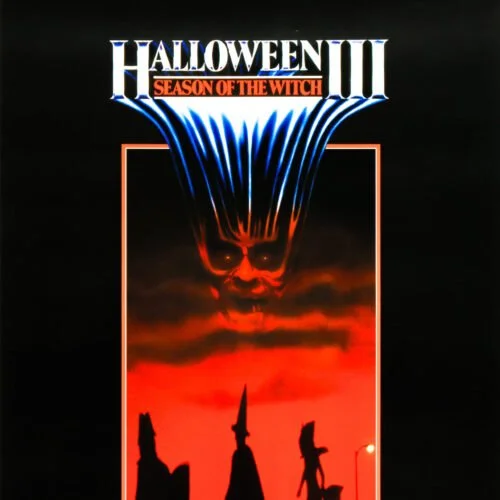
Halloween III: Season of the Witch while less on the nose compared to either of the Body Snatchers was no exception when it came to weaponizing social angst and turning it into compelling conspiracy horror. This film, while a massive departure from the prior Halloween films, *cough cough* dreadfully low on killers in plastered white William Shatner masks, was in my opinion the direction the Halloween franchise should have gone, which is anthological in nature, especially because it firstly produced films like this. In this film, a doctor and his companion investigate a mask company, believed to be involved with the death of the companion’s father, and what they uncover is a conspiracy to hurt the nation’s youth through the distribution of rigged Halloween masks. It would be hard to not notice the parallels this film shares with the sort of myth/wive’s tale regarding razor blades and Halloween candy as both reflect growing fears of parents that some stranger, for reasons none other than the goal of hurting children, would distribute a product in the hopes of causing pain. Lesser conspiracies that are still present in the film include concerns around computerization, and growing automation.
(As an aside, another reason I love this film is the small nods it pays to other conspiracy horror films, namely the original Invasion of the Body Snatchers, the fictional California towns in both are named Santa Mira.)
John Carpenter, who acted as producer and composer on Halloween III, would return to the genre for They Live (1988), a film which, for all my marbles I would wager is the most CONSPIRACY of the conspiracy horror genre. Setting aside the pitch perfect casting of Rowdy Roddy Piper, the film’s main star is a pair of sunglasses, which allows the user to see the subliminal “true” messaging behind advertisements and all manner of consumer content, it also allows for the user to see the true forms of aliens, by whom all of the dual layered messaging is actually created and weaponized by. Messages like “consume” and “obey” are littered through the cityscape skyline of the film and reflect the desire of the alien ruling class to keep working people subjugated and docile while they terraform and make the earth warmer to replicate their own planet. Carpenter himself has said that this film was borne out of the climate of the Reagan years and it’s hard to not see how. The consumerist messages on display were the same attitudes that had taken over fully by the end of Reagan’s first term and would also be fully on display in other contemporary films of the time like The Stuff, which is another great conspiracy horror, albeit one with a bit more humor. However, like all true great conspiracy horror, They Live is known best for being obvious in messaging regarding a problem of materialism and consumption that many, at the time, were unaware was actually a problem.
Conspiracy horror, while being a sub genre of horror that is primarily US based, takes a different shape when it leaves those borders and The Wicker Man (1973) is sometimes forgotten about when it comes to the conspiracy horror sub genre because it is correctly and primarily identified as folk horror, in the same vein as Midsommar, which I would also classify as conspiracy horror although to a lesser degree. For those not familiar, Wicker Man involves a police officer, venturing to a remote Scottish island, to investigate the purported death/disappearance of a young native girl. However, when he arrives, the devout Christian police officer, is confronted by the realization that all of the islanders are pagan and participate in odd rituals, as well as obfuscating the truth around the girl’s disappearance. The conspiracy is on to full effect until the very end, where a charismatic leader, the Lord Summerisle, portrayed by the incomparable Christopher Lee, sacrifices the police officer as part of the clan’s offering to the pagan gods. While a lot of US based conspiracy horror is centered around social class, fear of outsiders or the ruling class, or abuse of strangers, Wicker Man feels like a different beast in that it is still fundamentally fear of outsiders at its core that drives the machinations of conspiracy, but the fear of outsiders is rooted in religion, which feels somehow more unique to the European style of conspiracy. Of course, this conspiracy does make sense when considering the Troubles, which had been raging between Protestants and Catholics in Ireland for around 5 years at the time of this film’s release and the concern that permeated the UK as a whole during this period.
Conspiracy horror has fallen out of favor since the late 80’s and while I’m not sure if the rise of the internet and how conspiracy theory lore is disseminated is the cause of it, I am certain that the rise of disinformation in the digital age, has made many writers perhaps a bit more wary of taking on the task of writing compelling conspiracy horror. Is it out of fear of perpetuating ideas that could be misinterpreted and disseminated to negative effect? I think now to the how The Matrix inspired a number of folks to believe that we are living in a simulation. However, when I read through the ideas explored within each of the previously mentioned films, I see discussion being opened up to the greater moviegoing audience about what each concept means and how it relates to every moviegoers positionality in life. Art is meant to provoke and I do not believe there is any better teacher in this than the genre of conspiracy horror. It takes worst case possible scenarios and puts them to the test in film and when/if our protagonist triumphs in the end, it gradually tempers the fears in the mind of the moviegoer. When I see the rise of authoritarianism, automation, AI, anti-intellectualism, and scorn for LGBTQIA+ and BIPOC communities I see subject matter that is worth taking to the extreme and stress tests all playing out on a silver screen, with the end result being a return to normalcy and common sense. Conspiracy horror is the vessel in which commentary on these ideas is best explored.